This page marks the beginning of an ongoing visual and reflective record of my journey into astrophotography. The intention is not only to document a personal progression in technique and results, but also to provide students and interested readers with an accessible window into the night sky. Over time, the images presented here will—ideally—demonstrate gradual improvement as a function of experience, patience, and refinement of method.
The first set of images shared in this collection are deliberately simple. They are based on a limited number of frames and only minimal processing, primarily basic stacking to enhance visibility. As such, they should be understood as foundational attempts rather than finished products. Their value lies not in perfection, but in establishing a baseline from which growth can be observed.
Astrophotography is, by its nature, an exercise in patience and persistence. The process often requires extended periods of preparation, careful alignment, and repeated trial and error. This is particularly evident in the use of more advanced equipment. For instance, my current setup includes a Celestron 8 Edge telescope paired with a ZWO ASI533MC Pro camera. While capable of producing high-quality data, this system demands a slow and methodical setup process that can take approximately thirty minutes before any imaging can begin.
In contrast, I also employ a SeeStar S30 Pro, an all-in-one system designed for accessibility and efficiency. This instrument can begin collecting data within a few minutes and, despite its relatively small size and lower cost, produces surprisingly capable results. The comparison between these two systems highlights an important theme in astrophotography: different tools offer different balances between convenience, control, and image quality.
The initial targets in this project include a mix of solar system and deep-sky objects, each chosen for both their visual appeal and their educational significance.
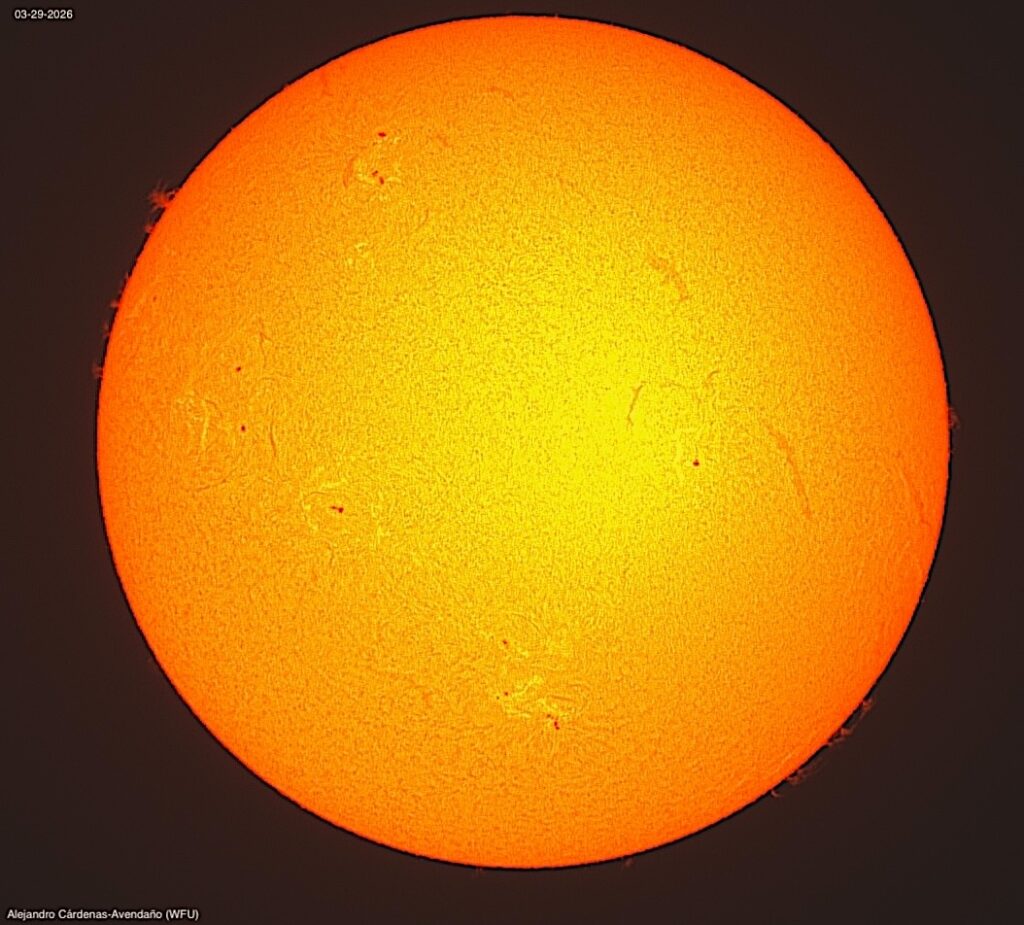
The Sun, our nearest star, serves as a natural starting point. Observing it safely reveals a dynamic and ever-changing surface, often marked by sunspots—regions of intense magnetic activity that appear darker due to their lower temperature. Imaging the Sun provides insight into stellar behavior on a scale that is otherwise difficult to appreciate.
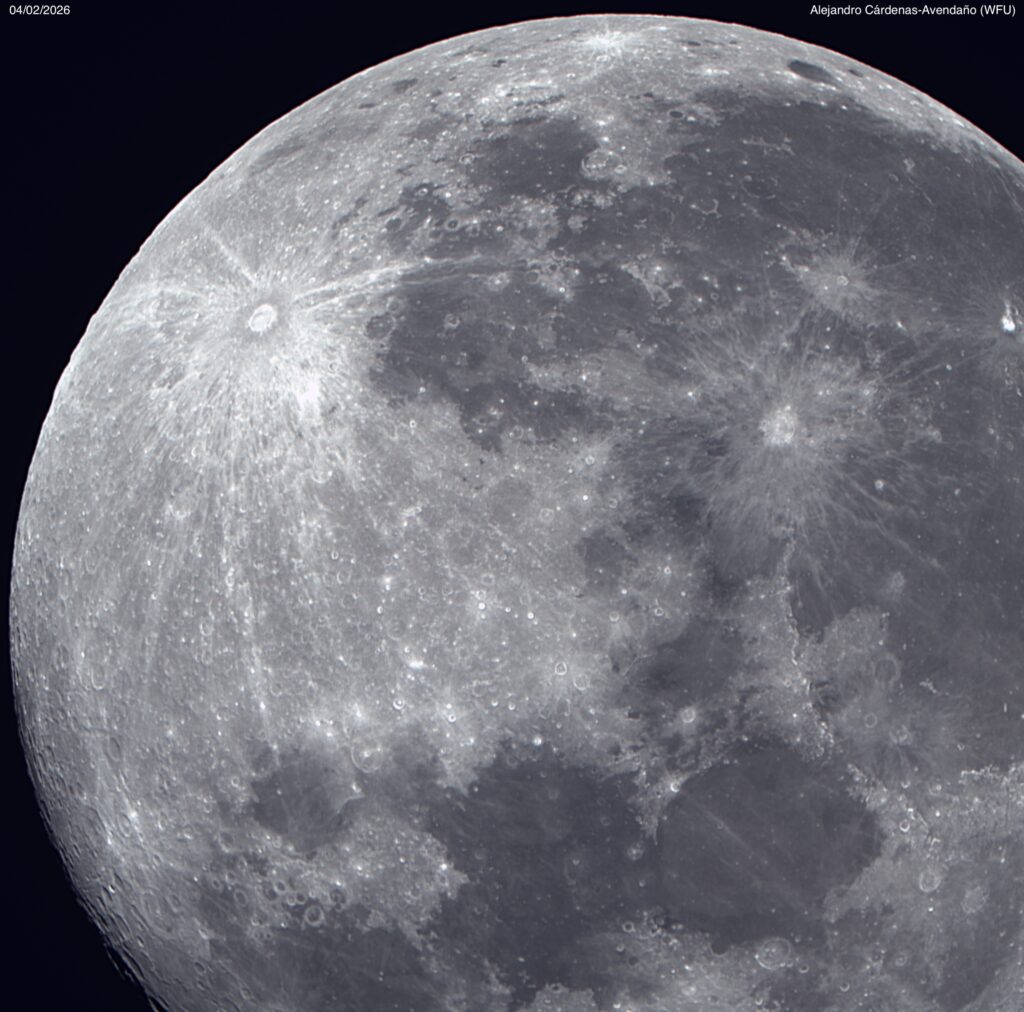
The Moon’s surface bears witness to a long history of heavy bombardment. We only see one side of it because of tidal locking (the Moon rotates on its axis at the same rate it orbits Earth—roughly every 27.3 days) not a coincidence! Another great example of gravitational interactions.
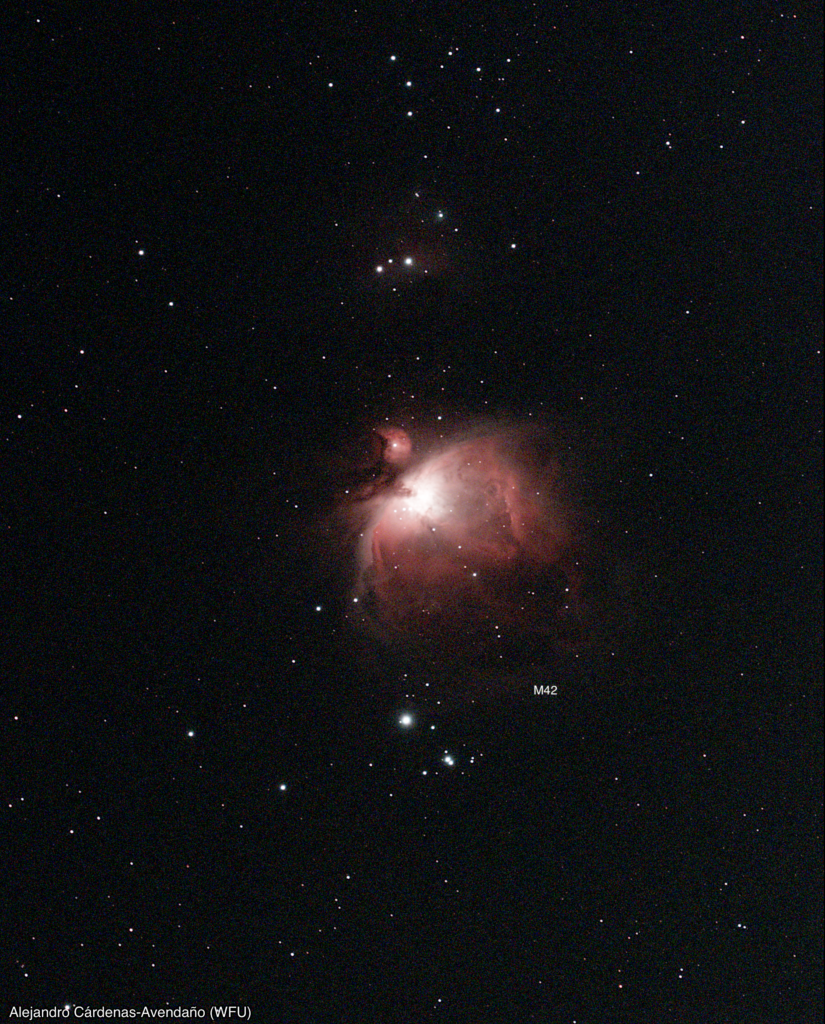
Beyond our solar system, the Orion Nebula (M42) represents one of the most accessible and studied regions of star formation. Located in the constellation Orion, it is a vast cloud of gas and dust where new stars are actively being born. Its brightness and structure make it a favorite target for beginners and experienced observers alike.
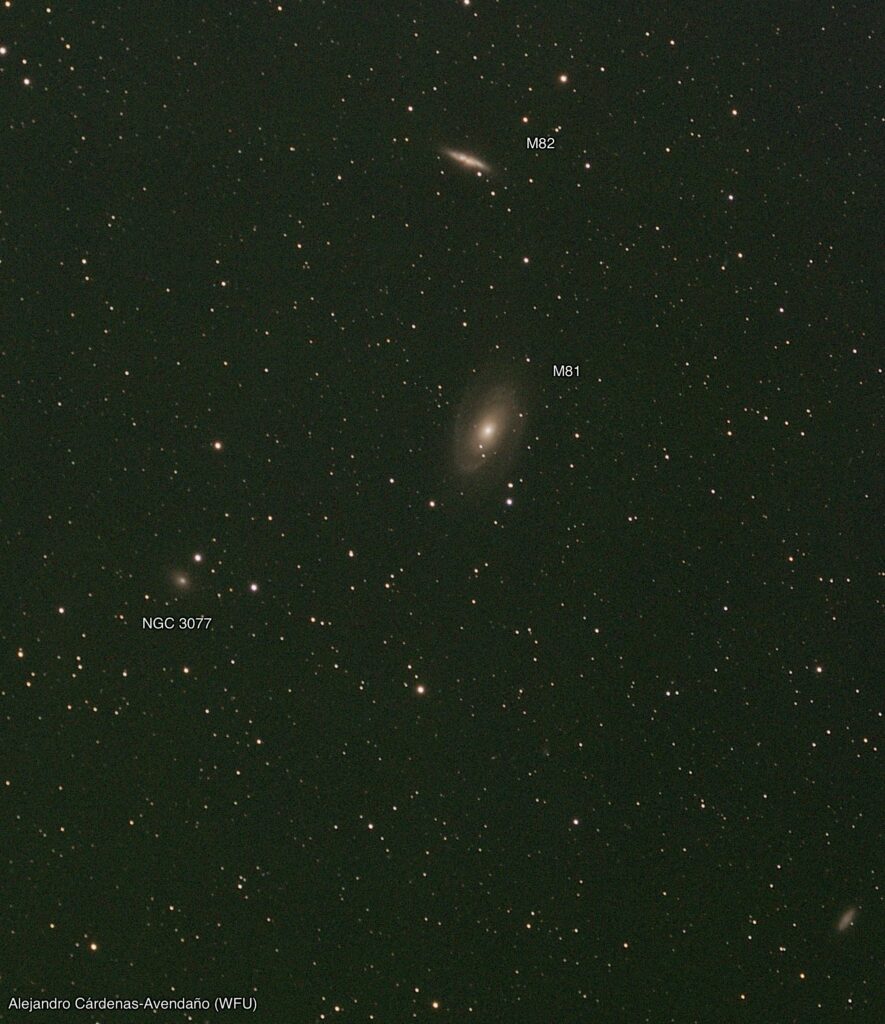
The galaxies M81 and M51 introduce a different scale of cosmic structure. M81, also known as Bode’s Galaxy, is a relatively nearby spiral galaxy whose well-defined shape offers a clear example of galactic structure.
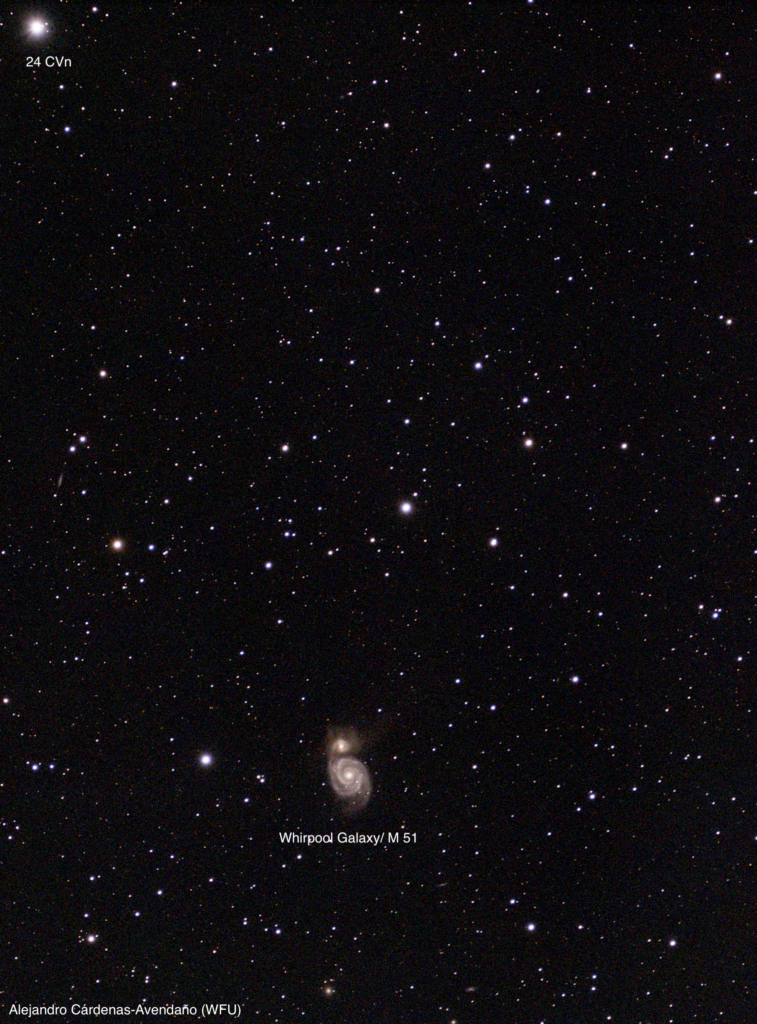
M51, the Whirlpool Galaxy, is particularly notable for its interaction with a smaller companion galaxy. This interaction produces striking spiral features and serves as a vivid illustration of gravitational forces shaping the universe over immense timescales.
Together, these initial images represent both a starting point and an invitation—to observe carefully, to ask questions, and to appreciate the complexity and beauty of the universe. As this collection grows, it will continue to reflect improvements in technique.
Acknowledgments: I want to express my deepest gratitude to my friend and colleague, Andres Gutierrez-Ruiz, for his invaluable support. He has dedicated countless hours to providing me with detailed long-voice messages, phone video tutorials, and most importantly, his unwavering patience and effort to encourage me to step beyond my computer simulations and analytical calculations and actually look up! I would like to also express my gratitude to Rebecca Alexander, our Senior Associate Dean for Research and Community Engagement, and Martin Guthold, our Physics Chair, for their unwavering support in championing the idea of public solar observations on our campus. These endeavors are generously supported by the Physics Department, the Undergraduate College at Wake Forest University, and the Levison Faculty Fellowship endowment fund.