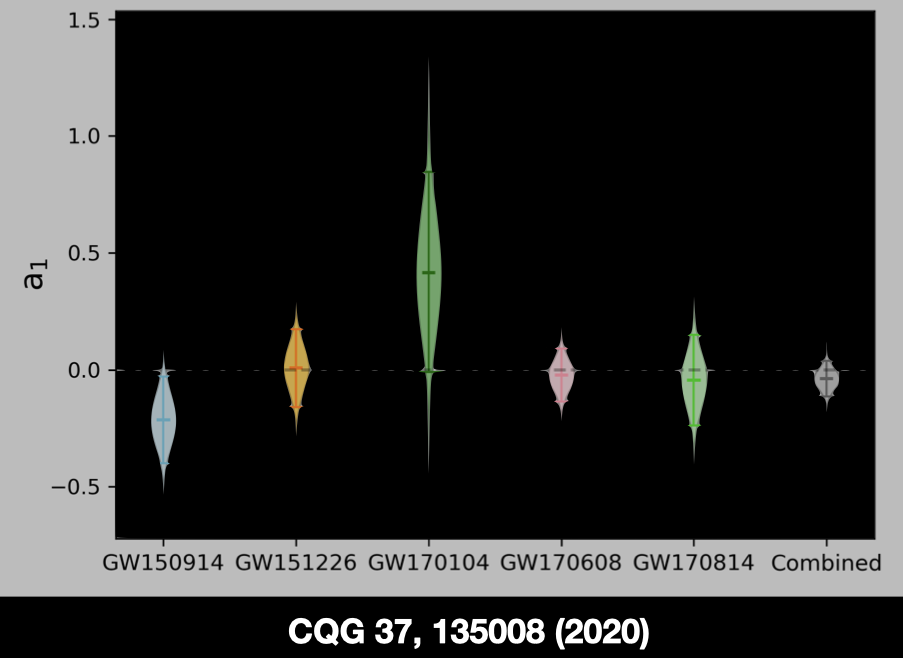
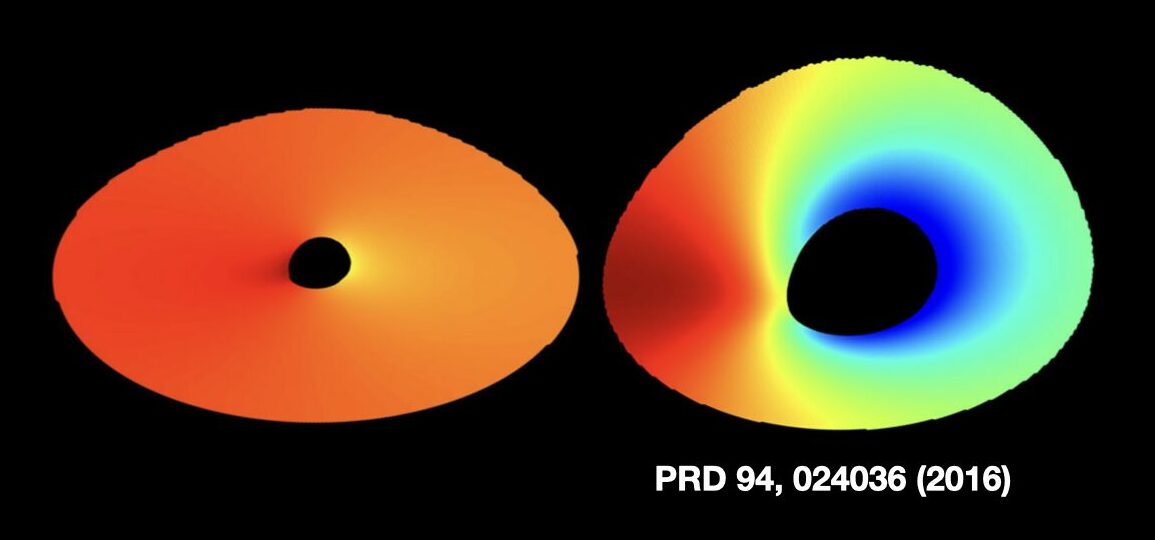
I am a computational astrophysicist with diverse interests that span gravitational physics, high-energy phenomena associated with compact objects, and dynamical systems theory. My group’s research involves studying observational signatures across both electromagnetic and gravitational spectra to investigate the effects of strong gravity.
In this link, you can find brief summaries of our group’s work.
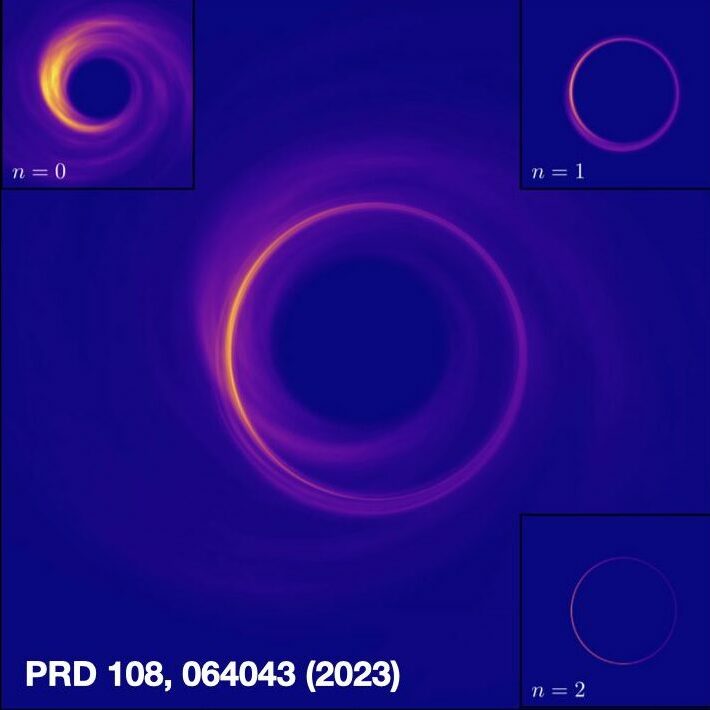
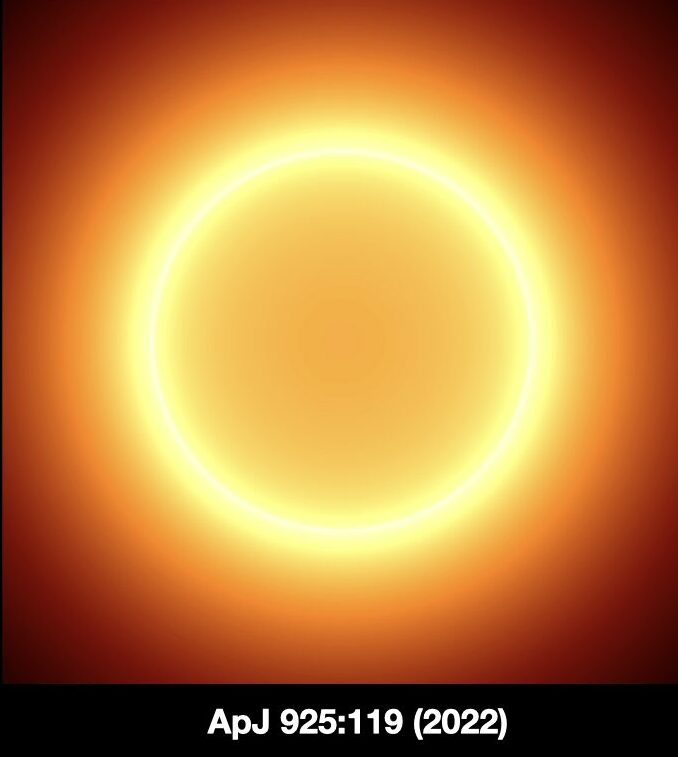
-> In the electromagnetic sector, we conduct numerical investigations into high-energy phenomena surrounding compact objects, employing models for accretion disks, images, and spectra. Currently, we are interested in finding ways to compute high-resolution black hole images capable of resolving the photon ring: a narrow, ring-shaped, lensed feature predicted by general relativity, but not yet observed. These photon rings carry information about the underlying spacetime geometry. In collaboration with my collaborators, we have been using Adaptive Analytical Ray Tracing (AART), an open-source framework capable of computing high-resolution simulated black hole images and their corresponding radio visibility accessible on very long space-ground baselines to study photon rings.
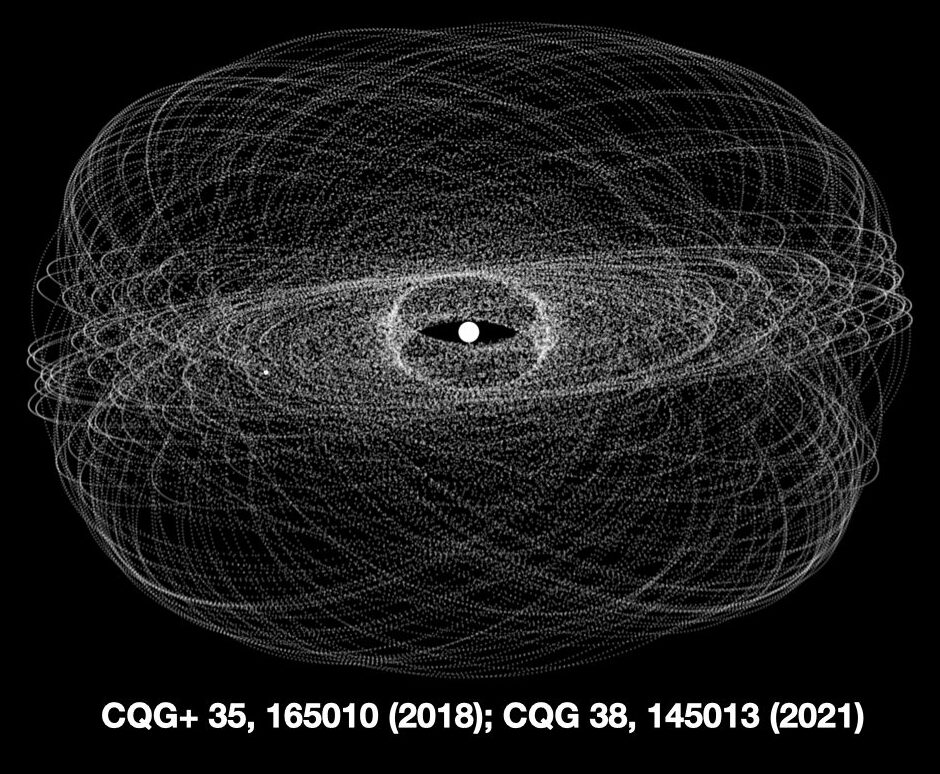
-> In the gravitational-wave sector, our focus lies in studying the orbital dynamics and gravitational waves emitted by extreme mass-ratio inspirals (EMRIs), which will be observable through the Laser Interferometer Space Antenna (LISA). We are interested in the integrability properties of solutions, exploring ways to study observable effects from general perturbations to these systems. On this front, our research explores various perturbations around resonances to discern their impact on constructing inspiral waveforms for testing general relativity.
-> We are also interested in numerically exploring nonlinear waves as models for the more intricate hyperbolic equations in physics. Their significance as models extends to elucidating the dynamics of spacetimes, providing insights into solutions for the Einstein equations. Our research currently focuses on numerically evolving various models to establish connections between linear and nonlinear outcomes within the framework of Einstein’s equations.
In our work, we employ both analytic calculations and computational simulations on large-scale computing systems, that use black holes as laboratories to test our understanding of gravity’s fundamental properties.
Gallery
You can click on any image below to be redirected to some papers on this topics further details, or here for animations: